
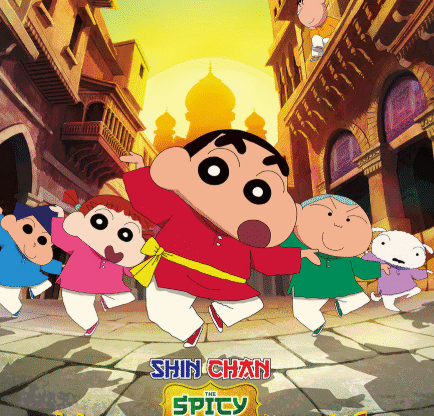
Shin-chan: The Spicy Kasukabe Dancers in India is the first Shin-chan film set in India, and it landed in Indian theatres on September 26, 2025, in Hindi, Tamil and Telugu. It is the 33rd film in the long-running Crayon Shin-chan movie series, and it sends Shinchan and his friends on a dance trip to India where one of them goes wildly off the rails.
It is a bright, silly and surprisingly warm adventure that leans hard into Indian music, dance and food, with an emotional thread built around Bo-chan. It was also a quiet performer at the Indian box office, so many fans are only now catching up. This guide covers the release details, story, characters, what makes it different, reception, our detailed review, pros and cons, a scorecard and FAQs, with no major spoilers.
Quick facts
| Detail | Info |
|---|---|
| Title | Shin-chan: The Spicy Kasukabe Dancers in India (Japanese title: Crayon Shin-chan the Movie: Super Hot! The Spicy Kasukabe Dancers) |
| Series entry | 33rd Crayon Shin-chan film, 32nd 2D animated film |
| Director | Masakazu Hashimoto |
| Writer | Kimiko Ueno |
| Studio | Shin-Ei Animation |
| Runtime | 105 minutes |
| Japan release | August 8, 2025 (Toho) |
| India release | September 26, 2025 |
| Languages in India | Hindi, Tamil and Telugu, plus the Japanese original |
| Setting | India, including a fictional Mumbai-like city called Musibai |
| India net box office | About 4.22 crore (Sacnilk estimate) |
Sources: Wikipedia for the film details, WION for the Indian release date, and Sacnilk for box office and languages.
Release date and setting
The film was released in India on September 26, 2025, about seven weeks after its Japanese premiere on August 8, 2025. It was originally planned for the Diwali season in October, according to Senal News, but the date was moved up, as WION reported in July 2025.
A note on “first”
It is the 33rd entry in the Crayon Shin-chan movie series and the first one set in India. It was not, however, the character’s first theatrical release in India. Shin-chan: Our Dinosaur Diary opened in Indian theatres in May 2025 and marked the franchise’s big-screen debut there, per WION. This film is the second Shin-chan release in Indian cinemas.
The India setting
Almost all of the story takes place in India. Director Masakazu Hashimoto says only about five minutes are set in Japan, according to NewsX. He called India “a perfect example to present my theme around friendships and self-discovery,” and he added dance and music elements for Indian audiences.
The film’s main city is a fictional Mumbai-like city called Musibai, in a fictional state, according to Wikipedia. WION’s report also mentions Delhi and Jaipur appearing in the story. The Indian setting is parody and affection rather than a documentary tour, which is much of the charm for Indian viewers.
What is the story about?
Shinchan and the Kasukabe Defence Force win a local dance competition in Japan, and the prize is a trip to India to perform. The trip also celebrates a new sister-city relationship with Kasukabe, according to Wikipedia.
Once they arrive, the gang does what Shinchan’s gang always does: wander off, get distracted and get into trouble. While shopping, Shinchan and Bo-chan buy a nose-shaped backpack from an antique shop. Something strange comes with it, and Bo-chan, usually the quiet and gentle one, changes into a tyrant and starts causing chaos.
The Kasukabe group teams up with three Indian locals, Ariana, Kabir and Dil, to help their friend and break the spell. Along the way they meet local food, music, dance and a lot of misunderstandings.
The shape of the film
- Setup in Japan. A short opening before the trip.
- Arrival in India. Culture-clash comedy and dance numbers.
- Bo-chan’s change. The adventure turns into a rescue mission about friendship.
- The finale. Friendship and self-discovery, the themes the director says he wanted to explore.
Spoiler note: this section covers only the setup. We do not reveal how the story ends.
Characters and voice cast
| Character | Who they are | Japanese voice |
|---|---|---|
| Shinchan | The mischievous kindergartener at the centre of everything | Yumiko Kobayashi |
| Misae | Shinchan’s mother | Miki Narahashi |
| Hiroshi | Shinchan’s father | Toshiyuki Morikawa |
| Himawari | Shinchan’s baby sister | Satomi Korogi |
| Bo-chan | Shinchan’s quiet friend and the film’s emotional anchor | Chie Sato |
| Nene | A Kasukabe Defence Force friend | Tamao Hayashi |
| Masao | A Kasukabe Defence Force friend | Teiyu Ichiryusai |
| Ariana, Kabir, Dil | Three Indian locals who help the group | See note |
Cast per Wikipedia. Voice credits for the Indian locals and for the Hindi, Tamil and Telugu dubs were not confirmed in the sources we checked.
The Kasukabe Defence Force
The gang is the series’ recurring group of five-year-olds, and the film keeps their familiar dynamic: Shinchan causes trouble, Nene is the energetic one, Masao is the nervous one and Bo-chan is the calm one. That last detail is the point, because the plot turns Bo-chan from comic relief into the heart of the story.
Viral Shinchan moments
The film is built from short, shareable gags, which is why clips travel well online. The moments viewers point to most:
- The nose-shaped backpack. The antique-shop purchase that kicks off Bo-chan’s transformation is the film’s best-known visual gag.
- Culture-clash food moments. Shinchan’s confusion over Indian dishes such as chapati.
- Dance battles in famous city settings. Including a sequence set around Delhi’s Connaught Place.
- Rickshaw antics. Shinchan’s chaotic rides through Indian streets.
- “Namaste!” The gang’s enthusiastic, slightly off desi greetings.
- The “Danger Zone” parody. Hiroshi, voiced by Toshiyuki Morikawa, sings a parody of the Top Gun song, according to Wikipedia.
These scenes are the kind fans recreate as reels and dance clips, and they give nostalgic viewers an easy way to share their own Shinchan memories.
What makes it different
- The first Shin-chan film set in India. Japanese animation meets local flavour: rickshaw rides, Bollywood-style rhythm, kulhad chai and plenty of desi humour. For long-time fans it is a refreshing change of scenery.
- A director who chose India on purpose. Masakazu Hashimoto says he is a fan of Indian movies and wanted India as a setting for a story about friendship and self-discovery. He found several shops selling Shin-chan merchandise on his trips and added dance and music for Indian viewers.
- Cultural crossovers. Expect Shinchan to break into Hindi-flavoured songs, try local snacks and even play kabaddi, which makes it a good pick for both anime fans and Indian moviegoers.
- Emotional depth. Bo-chan, usually comic relief, becomes the emotional anchor, so the film gives audiences more than slapstick.
- A real Indian release. Dubbed in Hindi, Tamil and Telugu and released in theatres by PVR INOX Pictures, it reached Indian audiences close to the Japanese premiere.
- Mostly in India. According to the director, only about five minutes are set in Japan.
Director comments are from NewsX, and the distributor and languages from Senal News.
Critical reception and box office
Reviews
Coverage of the Indian release was light, and the reviews we found were lukewarm. Trade site Film Information called it “ordinary fare” and said it offered no novelty, with entertainment “in bits and parts only.” It did give credit to the screenplay, the editing, the background music and the dubbing, and noted that the effort to appeal to Indian audiences was “all too evident.”
That reaction is worth keeping in context: it comes from a trade review of the dubbed version, and the Japanese original was released simultaneously and was expected to do better.
Box office in India
Per Sacnilk, whose figures are estimates:
| Language | India net |
|---|---|
| Hindi | 3.65 crore (86.5%) |
| Tamil | 0.40 crore (9.5%) |
| Telugu | 0.17 crore (4.0%) |
| Total | about 4.22 crore |
Sacnilk labels the run a “disaster.” Film Information also described the opening as weak. In other words, the film was a small release, so the lack of a big box office does not say much about whether you will enjoy it.
Possible reasons for the modest numbers
- A niche release. Anime films dubbed in Indian languages are still a small segment of the market.
- A quick turnaround. It reached Indian screens about seven weeks after Japan, with the date moved up from October.
- Light marketing. Film Information called the publicity dull.
Our review
Shin-chan: The Spicy Kasukabe Dancers in India is a bright, silly, heartfelt adventure that works as a love letter to both anime and Indian pop culture. It is not a perfect film, but it delivers laughs, warmth and plenty of chaos, and it has more on its mind than the slapstick suggests.
The premise
A dance prize that sends the Kasukabe gang to India is an easy, inviting setup. It puts Shinchan’s trademark mischief in a brand-new place and gives every scene a reason to be colourful. The story is simple: a trip, a cursed purchase, a friend who changes and a group effort to bring him back. That simplicity keeps the film light and easy for kids to follow.
The humour
This is classic Shin-chan comedy: cheeky, physical and unashamed of being silly. The India setting adds fresh material, from the confusion over Indian food to dance battles and rickshaw antics, and the film is at its best when Shinchan collides with local customs. Not every gag lands, and viewers who want novelty may feel they have seen the basic joke shapes before. Film Information found the entertainment came “in bits and parts only,” which is a fair warning.
Bo-chan: the heart of the film
The smartest choice is making Bo-chan, normally the calm background friend, the emotional anchor. When he changes into a tyrant, the story shifts from a sightseeing comedy into a film about loyalty and friendship, which is the theme Hashimoto says he wanted. It gives audiences more than slapstick and gives the finale something to care about.
The India portrayal
The film is affectionate, not documentary. It plays with Indian food, music, dance and city life through a fictional Mumbai-like city, Musibai. Film Information noted the effort to appeal to Indian audiences is “all too evident,” and we agree that it is sometimes obvious. But the warmth comes through, and Indian viewers are likely to enjoy seeing their world through Shinchan’s eyes.
Music, dance and animation
Dance is central to the premise, and the film leans on it. The animation keeps the series’ familiar, simple look rather than aiming for spectacle, which suits the humour. The Danger Zone parody is a fun nod for adult viewers.
The dub
The film was dubbed in Hindi, Tamil and Telugu. Film Information called the dubbing “proper,” with the voice acting “okay.” If you can, try the Japanese original too, since it was released at the same time.
Pacing
At 105 minutes, it is a sensible length for an animated family film, and the simple story keeps it easy to follow.
Who it is for
It is a good fit for longtime Shin-chan fans, newcomers who enjoy gentle chaos and families looking for a family movie night. It is not a pick if you want a sharply written or surprising story.
Pros and cons
| Pros | Cons |
|---|---|
| First Shin-chan film set in India | Story offers little novelty |
| Fun culture-crossover humour | Entertainment comes in bits and parts |
| Bo-chan gives it real emotional weight | Appeal to Indian viewers can feel obvious |
| Easy, family-friendly viewing | Weak box office and light publicity |
| Dubbed in Hindi, Tamil and Telugu | Dub voice acting called only “okay” |
| Short at 105 minutes | Not on Indian streaming at the time we checked |
Pros in detail
- A fresh setting. India gives a long-running series a new backdrop, with rickshaws, dance, food and local chaos.
- Culture-crossover comedy. The gags come from Shinchan meeting Indian customs, which works for fans and newcomers.
- Emotional depth. Making Bo-chan the centre of the story gives the film a heart beyond slapstick.
- Easy to watch. A simple story and a 105-minute runtime suit family movie nights.
- Made for Indian audiences. A real theatrical release in three Indian languages, plus the Japanese original.
- A director with a point of view. Hashimoto’s stated aim, a story about friendship and self-discovery, gives the silliness a purpose.
Cons in detail
- Familiar beats. Film Information said the story offers no novelty.
- Uneven laughs. Entertainment arrives “in bits and parts only.”
- Obvious appeal. The effort to win Indian viewers is “all too evident,” which can feel like pandering.
- Modest dub. The voice acting was called “okay,” so the Japanese original may suit some viewers better.
- Hard to find now. JustWatch listed no Indian streaming option when we checked.
- Weak commercial run. About 4.22 crore net in India is small, so it was easy to miss.
Our rating: 3.5 out of 5
| Category | Score | Why |
|---|---|---|
| Story | 3 / 5 | Simple and familiar, but with a strong friendship core |
| Humour | 3.5 / 5 | Fun culture-clash gags, uneven overall |
| Emotional depth | 4 / 5 | Bo-chan’s arc gives it heart |
| India setting and charm | 4 / 5 | Affectionate and fresh, if sometimes obvious |
| Animation and music | 3.5 / 5 | Classic style, dance-driven |
| Dub and family appeal | 3.5 / 5 | Easy for kids, dub only “okay” |
| Overall | 3.5 / 5 | A warm, silly adventure that is easy to like |
For context, the one published review we found called it “ordinary fare,” so this score is more generous. It reflects how well the film delivers on what it promises: laughs, warmth and chaos for fans and families.
Should you watch it?
For longtime Shin-chan fans and newcomers alike, The Spicy Kasukabe Dancers in India is a bright, silly, heartfelt adventure that feels like a love letter to both anime and Indian pop culture. It may not be perfect, but it delivers laughs, warmth and plenty of chaos, which makes it a great pick for family movie nights or anyone looking for animated fun with a hint of meaning.
Watch it if you:
- already love Shinchan and the Kasukabe Defence Force
- want an easy family movie night
- enjoy culture-crossover comedy and dance
- like friendship stories with a small emotional kick
Skip it if you:
- want a sharply written, surprising plot
- find Shinchan’s cheeky humour grating
- expect a faithful, realistic portrait of India
Where to watch
The film was released in Indian theatres, and JustWatch listed no streaming, rental or purchase option in India when we checked . It lists the film on Netflix in Japan, and availability changes often, so check your own country’s catalogue or the listing’s “notify me” option for updates.
Final verdict
Shin-chan: The Spicy Kasukabe Dancers in India is a warm, silly and affectionate adventure that gives the series a fun change of scene and a surprisingly heartfelt centre in Bo-chan. It is not a surprising or sharply written film, but it is easy to like. At 3.5 out of 5, it is a good pick for fans, families and anyone curious about anime with a desi twist.
Did you watch it? Tell us in the comments which scene made you laugh the most and whether you preferred the Hindi dub or the Japanese original.
FAQs
When was it released in India? September 26, 2025, in theatres. The Japanese premiere was August 8, 2025.
Is it the first Shin-chan film released in India? No. Shin-chan: Our Dinosaur Diary came out in Indian theatres in May 2025. This is the first Shin-chan film set in India and the second released there.
Which film in the series is it? The 33rd Crayon Shin-chan film and the 32nd 2D animated one.
What is it about? Shinchan and the Kasukabe Defence Force win a dance contest and travel to India to perform, where Bo-chan changes into a tyrant and his friends try to help him.
Who directed it? Masakazu Hashimoto, with a screenplay by Kimiko Ueno, produced by Shin-Ei Animation.
What languages is it available in? Hindi, Tamil and Telugu dubs, plus the Japanese original, in Indian theatres.
How long is it? 105 minutes.
Is it set entirely in India? Almost. The director says only about five minutes take place in Japan.
Do I need to have watched other Shin-chan films? No. It is a standalone adventure, though fans will enjoy the familiar characters more.
Is it suitable for children? It is a family-friendly animated film, but Shin-chan’s humour is cheeky, so check content notes for very young viewers.
Where can I watch it now? JustWatch listed no Indian streaming option when we checked. Availability changes, so check your own catalogue.
How did it do at the box office? About 4.22 crore net in India per Sacnilk’s estimate, which labels it a disaster, so it was a small release.