
Introduction
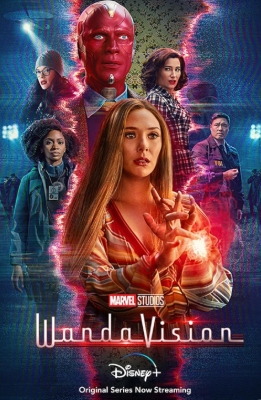
Before Loki proved Disney+ could deliver genuinely inventive MCU television, WandaVision got there first — and remains, for many fans, the platform’s most creatively daring entry to date. Marvel Studios’ first Disney+ series took a genuinely bizarre pitch — Wanda Maximoff and Vision living out decades of classic American sitcoms — and turned it into one of the most emotionally resonant grief stories the MCU has ever told. It’s a show that asks you to sit through pitch-perfect parodies of I Love Lucy and Bewitched before revealing exactly why that premise makes devastating sense.
Quick Facts
| Category | Details |
|---|---|
| Head Writer | Jac Schaeffer |
| Director | Matt Shakman |
| Starring | Elizabeth Olsen, Paul Bettany, Kathryn Hahn, Teyonah Parris, Randall Park, Kat Dennings |
| Also Starring | Evan Peters, Josh Stamberg, Debra Jo Rupp |
| Episodes | 9 |
| Genre | Superhero / Mystery / Dark Comedy / Drama |
| Platform | Disney+ |
| Release Dates | January 15 – March 5, 2021 |
| Rotten Tomatoes | 92% (Season overall); Finale: 86% |
Overview
Set shortly after the events of Avengers: Endgame, WandaVision follows Wanda Maximoff and Vision living an idealized suburban life in the town of Westview — a life presented as a loving homage to decades of classic American sitcoms, shifting era by era from the 1950s black-and-white style of The Dick Van Dyke Show through 2000s mockumentary formats reminiscent of Modern Family. As small cracks appear in this too-perfect world — a beekeeper emerging from a sewer, a radio voice begging Wanda to “find the truth” — it becomes clear that Westview’s reality is being controlled by Wanda herself, and that something far darker than nostalgia is hiding just beneath the surface.
How It Ends
Spoilers ahead. The season’s central mystery resolves around Agnes, Wanda’s nosy neighbor, who’s revealed in the standout seventh episode to actually be Agatha Harkness — a centuries-old witch who had been secretly influencing Westview from the shadows, hoping to steal Wanda’s immense power for herself. The finale, appropriately titled “The Series Finale,” delivers an action-heavy climax: Wanda battles Agatha in a witch duel across Westview, while Vision confronts a rebuilt, memory-wiped “White Vision” sent by S.W.O.R.D. director Tyler Hayward to destroy his original counterpart. The two Visions ultimately resolve their standoff through dialogue rather than combat, with the original Vision talking White Vision through a Ship of Theseus philosophical exercise until he regains his memories and departs peacefully. Wanda ultimately defeats Agatha by turning the witch’s own protective runes against her, trapping Agatha’s true magical identity within a suburban “Agnes” persona in Westview. In the process, Wanda is forced to release the entire town from the reality-warping “Hex” she created, freeing the residents she had unknowingly imprisoned and tormented — including her own children, Billy and Tommy, who cease to exist the moment the Hex collapses. The episode closes with Wanda leaving Westview in disgrace, viewed as a villain by the people she harmed, while secretly studying the Darkhold (“the Book of the Damned”) to learn more about her true powers as the Scarlet Witch — setting up her subsequent appearance in Doctor Strange in the Multiverse of Madness.
Every Sitcom Era, Episode by Episode
Part of what made WandaVision so distinctive was its meticulous, decade-by-decade recreation of American sitcom history — director Matt Shakman called it “a love letter to the history of television,” and the cast and crew reportedly attended a sitcom “bootcamp” to nail each era’s specific tone and camera style.
- Episode 1 (1950s) — A loving homage to I Love Lucy, The Dick Van Dyke Show, and Leave It to Beaver, right down to Wanda and Vision’s separate twin beds, a common censorship convention of the era. Dick Van Dyke himself was reportedly consulted on the episode.
- Episode 2 (1960s) — Draws directly from Bewitched and I Dream of Jeannie, with an opening title sequence styled almost identically to Bewitched‘s. The episode ends the way many Bewitched episodes did: with a knowing exchange and a close-up kiss.
- Episode 3 (1970s) — The show transitions into full color, mirroring The Brady Bunch and The Partridge Family, with Wanda’s sudden pregnancy driving the plot.
- Episode 4 (“We Interrupt This Program”) — Breaks from the sitcom format entirely for the first time, shifting outside Westview to explain the S.W.O.R.D. investigation into Wanda’s actions.
- Episode 5 (1980s) — Channels Full House and Growing Pains, notably featuring an intro sequence lifted from Full House — a fun bit of meta-casting, since Elizabeth Olsen’s older sisters, the Olsen twins, famously starred in that very show as babies.
- Episode 6 (“All-New Halloween Spooktacular!”, 1990s/2000s) — Widely considered one of the season’s best episodes, this one homages Malcolm in the Middle almost beat for beat, right down to its opening titles, while advancing the plot through Vision’s own growing suspicions about Westview.
- Episode 7 (“Breaking the Fourth Wall”, 2010s) — A mockumentary-style episode drawing from Modern Family and The Office, complete with talking-head interview segments and a Jim Halpert-style camera glance from Vision. This is also the episode that reveals Agnes is secretly Agatha Harkness, with the closing musical number “Agatha All Along” becoming a genuine viral sensation.
- Episodes 8–9 — The sitcom format is largely abandoned as the story moves into more traditional MCU territory, with Episode 8 (“Previously On”) revealing Wanda’s tragic backstory and Episode 9 delivering the action-heavy finale.
According to several ranking retrospectives from outlets like CBR and Collider, Episodes 2 and 6 are frequently cited as the show’s standout entries for successfully balancing sitcom pastiche with escalating mystery, while the more conventional back half — though narratively necessary — is generally considered a step down in terms of visual creativity.
Pros & Cons
Pros
- A genuinely original premise for a superhero project, blending sitcom parody with a slow-burn psychological mystery unlike anything else in the MCU.
- Elizabeth Olsen delivers a career-best performance, balancing sitcom charm with raw, devastating grief, and Paul Bettany matches her beat for beat — both were nominated for Emmy Awards for their performances.
- Kathryn Hahn’s Agatha Harkness is an instantly iconic MCU villain, memorable enough to headline her own spinoff series, Agatha All Along.
- Meticulous production design and format details — aspect ratio changes, era-accurate cinematography, and note-perfect theme songs for each decade — reward close attention.
- A genuinely moving exploration of grief that gives the MCU some of its most emotionally mature storytelling to date.
Cons
- The finale leans heavily into standard MCU action spectacle, which several critics felt undercut the show’s more intimate, personal earlier episodes.
- Some reviewers found the ending rushed, arguing the show needed an additional episode to fully resolve its emotional and narrative threads.
- Fans expecting major cameos (Doctor Strange rumors were rampant pre-finale) were left disappointed when none materialized.
- Monica Rambeau, despite a strong hero moment, gets comparatively little screen time in the finale itself.
- The show’s slower, more experimental early episodes can be a barrier for viewers expecting immediate superhero action.
Similar Shows
- Loki — Disney+’s next major MCU series, sharing WandaVision’s willingness to prioritize character psychology over pure spectacle.
- Agatha All Along — the direct spinoff following Kathryn Hahn’s breakout villain.
- Doctor Strange in the Multiverse of Madness — the film that directly continues Wanda’s story after the WandaVision finale.
- Legion (FX) — another Marvel property exploring psychological instability and reality-warping powers in a stylistically inventive way.
- The Twilight Zone (Original series) — for the classic “perfect suburban world hiding something sinister” storytelling tradition WandaVision draws from.
Final Verdict
WandaVision remains one of the MCU’s boldest creative swings — a show willing to spend its first act on loving sitcom pastiche before revealing a genuinely moving meditation on grief underneath. While its action-heavy finale draws fair criticism for trading some of that earlier intimacy for standard superhero spectacle, the season as a whole set a new bar for what Marvel’s television output could achieve, anchored by career-best performances from Elizabeth Olsen, Paul Bettany, and Kathryn Hahn.
Rating: 8.5/10 — A genre-bending, emotionally rich MCU triumph, even with a slightly less satisfying finale than the build-up deserved.
FAQs
How many episodes does WandaVision have? Nine episodes, released weekly from January 15 to March 5, 2021.
Who is Agnes really? Agnes is revealed to be Agatha Harkness, a centuries-old witch secretly manipulating events in Westview to steal Wanda’s power.
What happens to Wanda’s children, Billy and Tommy? They cease to exist once Wanda releases the Hex and Westview returns to reality, since they were created by her reality-warping powers. They are later revived in Marvel comics and referenced in future projects.
Does Vision survive the series? The original, “Westview” Vision ceases to exist once the Hex collapses, as he was also a creation of Wanda’s powers. However, “White Vision” — reconstructed from Vision’s original body by S.W.O.R.D. — survives, regains his memories, and departs at the finale’s end, confirmed to return in future projects.
What is the Darkhold? Referred to as “the Book of the Damned,” it’s an ancient, dangerous magical text that Wanda is shown studying in the finale’s mid-credits scene, directly setting up her role in Doctor Strange in the Multiverse of Madness.
Is WandaVision considered one of the best MCU Disney+ shows? Yes, it’s frequently cited by critics and fans as one of the strongest and most inventive entries in Marvel’s Disney+ lineup, alongside Loki.
What is WandaVision’s Rotten Tomatoes score? The series holds an overall 92% critics score, with the finale specifically scoring 86%.
Where can I watch WandaVision? It’s available exclusively on Disney+.