
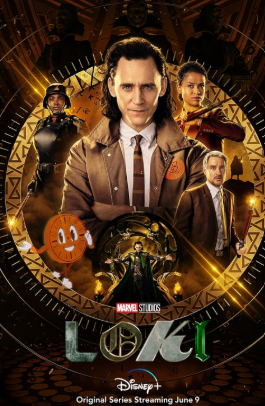
Introduction
Tom Hiddleston played Loki for over a decade before Disney+ finally gave the God of Mischief the spotlight he’d been quietly stealing since 2012’s The Avengers. Across two seasons, Loki took Marvel’s most beloved trickster villain and turned him into one of the MCU’s most genuinely transformed characters — closing out, in Hiddleston’s own words, “the conclusion to six films and 12 episodes and 14 years of my life.” Here’s the complete series, season by season.
Quick Facts
| Category | Details |
|---|---|
| Starring | Tom Hiddleston, Owen Wilson, Sophia Di Martino, Gugu Mbatha-Raw, Wunmi Mosaku |
| Season 2 Additions | Ke Huy Quan, Rafael Casal, Kate Dickie |
| Head Writers | Michael Waldron (S1), Eric Martin (S2) |
| Directors | Kate Herron (S1); Justin Benson & Aaron Moorhead (S2) |
| Episodes | 6 per season, 12 total |
| Platform | Disney+ |
| Season 1 | June 9 – July 14, 2021 |
| Season 2 | October 5 – November 9, 2023 |
| Rotten Tomatoes | Season 1: Certified Fresh; Season 2: 81% (Certified Fresh) |
Overview
Set after Loki (Tom Hiddleston) steals the Tesseract during the Avengers’ time heist in Endgame, the series follows this “variant” version of the character as he’s captured by the Time Variance Authority (TVA) — a bureaucratic organization tasked with policing the Sacred Timeline and eliminating any branching realities. Forced to confront his own identity, choices, and capacity for change, Loki is recruited to help hunt down a mysterious and more dangerous variant of himself, setting off a chain of events that unravels the TVA’s true purpose and threatens to unleash the entire multiverse.
Season 1 (2021)
Loki’s introduction to the TVA is a fish-out-of-water setup filtered through sharp, retro-futuristic sci-fi style, with production design evoking a bureaucratic office aesthetic somewhere between 1970s government offices and cosmic time-management. The premiere, “Glorious Purpose,” opens with Loki being pruned from the Sacred Timeline moments after escaping with the Tesseract during the Avengers’ 2012 time heist — a version of Loki who never had his Endgame redemption arc, making him a much darker, more selfish, more purely mischievous variant than the one MCU audiences last saw sacrifice himself in Infinity War.
He’s paired with Agent Mobius (Owen Wilson), a TVA analyst whose genuine curiosity about Loki’s psychology becomes the show’s central relationship early on. Rather than simply imprisoning or eliminating him, Mobius recruits Loki to help track down a mysterious, more dangerous variant wreaking havoc across the timeline — a hunt that takes them through visually inventive episodes including a doomed apocalyptic world (Lamentis-1) and a Y2K-era Renaissance Faire raid, each designed to strip away Loki’s usual bravado and force him into genuine vulnerability.
The season’s biggest reveal comes with Sylvie (Sophia Di Martino), the variant Loki’s been hunting — a female Loki variant hardened by a lifetime of TVA pursuit, who’s built her own resistance and agenda for tearing the organization down entirely. Her dynamic with Loki raises real questions about identity, free will, and self-determination: are all Loki variants doomed to make the same selfish choices, or can circumstance and connection change that? Their relationship — part rivalry, part reluctant partnership, part something more — becomes the emotional engine driving Loki toward genuine change for the first time in his MCU history.
The finale, “For All Time. Always.,” sends Loki and Sylvie to the Citadel at the End of Time to confront He Who Remains (Jonathan Majors) — the enigmatic, multiverse-manipulating architect who reveals he created the TVA and the Sacred Timeline to prevent a catastrophic multiversal war between infinite variants of himself. He offers the pair a choice: kill him and risk unleashing that war across a newly-freed multiverse, or take his place and maintain the status quo. Loki, having genuinely fallen for Sylvie and grown to trust her judgment, urges caution. Sylvie, driven by years of trauma and a refusal to trust anyone with that kind of unchecked power, kisses Loki, then uses the moment to banish him back to the TVA before killing He Who Remains herself — shattering the Sacred Timeline and unleashing the multiverse the MCU would spend its subsequent Phase 4 and 5 projects exploring. The season closes on Loki alone, watching TVA hallways branch into infinite new timelines around him, having lost Sylvie and unsure if anyone even remembers who he is.
Season 2 (2023)
Picking up literally seconds after Season 1’s finale, Loki finds himself “time-slipping” — unstuck and flickering uncontrollably between different points in the TVA’s past and future, a disorienting condition used as both a visual gimmick and a metaphor for his fractured sense of self after losing Sylvie. He stumbles into the TVA’s technical bowels and meets Ouroboros, or “OB” (Ke Huy Quan), a cheerfully obsessive repairman who’s spent centuries alone maintaining TVA equipment without ever meeting another living soul — a performance that became an instant fan favorite and marked Quan’s continued post-Everything Everywhere All at Once resurgence.
With the TVA in chaos following the Sacred Timeline’s collapse, Loki works alongside Mobius, Hunter B-15 (Wunmi Mosaku), and OB to stabilize the organization and prevent it from being destroyed entirely, while also grappling with what to do about Sylvie, who’s now living a quiet, contented life in 1980s Oklahoma McDonald’s rather than continuing the fight. New antagonist Victor Timely — another Kang variant played by Jonathan Majors — introduces fresh complications, an inventor-scientist version of the character the TVA hopes to recruit rather than fight.
Critics were split on this season compared to the first. Some praised its deepened character work, tighter emotional focus, and Ke Huy Quan’s instantly beloved performance, with several reviews calling the ensemble chemistry the best of any MCU Disney+ series. Others felt the show lost some of its original bite and mischief following Jonathan Majors’s real-life legal troubles, which forced Marvel to quietly retire Kang as the MCU’s central villain partway through the season’s production and promotional cycle — a behind-the-scenes crisis that inevitably colored how audiences read Majors’s on-screen performance and the season’s escalating Kang-centric stakes.
Regardless, the season built toward a finale, “Glorious Purpose” (sharing its title with the Season 1 premiere), that critics widely praised as one of the most emotionally resonant pieces of television Marvel has ever produced. Faced with a fundamentally unstable Temporal Loom that threatens to destroy every branching timeline in the multiverse, Loki realizes there’s no version of the machine that can hold infinite realities together safely. Instead, he chooses to dissolve the Loom entirely and physically become the vessel holding the multiverse together himself — walking through the burning wreckage of collapsing timelines, gathering the branches with his own hands and magic, and weaving them into a new, stable form around himself. The sequence transforms him into a Yggdrasil-like figure, the World Tree of Norse mythology, sitting eternally at the center of all realities so that his friends — Mobius, Sylvie, OB, everyone he’s grown to love — can go on living free, branching lives without him. It’s an ending built entirely around sacrifice rather than victory: Loki finally gets to be the “god” he always wanted to be, but the price is total, permanent solitude, watching over everyone he loves from a distance he can never cross again. Head writer Eric Martin described the two seasons as “two halves of a book,” closing the story on Loki and the TVA for good, while Tom Hiddleston himself called the finale “the conclusion to six films and 12 episodes and 14 years” of playing the character.
Key Characters
Loki (Tom Hiddleston) — This variant of Loki is captured immediately after the 2012 Avengers battle, meaning he skips the character growth from Thor: Ragnarok, Infinity War, and Endgame entirely. The series essentially has to earn his redemption arc from scratch, which is part of what makes his eventual transformation into a self-sacrificing protector so dramatically satisfying — he has genuinely further to travel than almost any other version of the character.
Mobius M. Mobius (Owen Wilson) — A TVA analyst whose warmth, dry humor, and genuine investment in Loki’s psychological journey make him the show’s moral anchor. His famous jet ski obsession becomes a recurring symbol of the “ordinary life” he secretly longs for, mirroring Loki’s own eventual sacrifice of that same possibility.
Sylvie (Sophia Di Martino) — A Loki variant raised in isolation by the TVA’s pruning process, hardened into someone who trusts almost no one and refuses any solution that leaves power concentrated in a single being’s hands — even a version of herself. Her ideological clash with Loki in the Season 1 finale is the show’s thesis statement made literal: is control necessary to prevent chaos, or is uncontrolled free will worth the risk?
Ouroboros/OB (Ke Huy Quan) — Introduced in Season 2, OB has spent an unknown number of centuries alone in the TVA’s repair department without ever speaking to another person, making his instant, guileless friendship with Loki and Mobius one of the show’s most purely joyful elements amid heavier themes.
He Who Remains / Kang / Victor Timely (Jonathan Majors) — Playing multiple variants across both seasons, Majors’s performance was central to setting up Kang as the MCU’s next great multiversal threat — a plan Marvel Studios ultimately abandoned following his real-world legal troubles and firing.
Themes and What the Show Is Really About
At its core, Loki is a show about the tension between free will and control — literalized through the TVA’s mission to “prune” any timeline that deviates from an approved path. Every major character is defined by how they resolve that tension: Mobius chooses institutional order even at personal cost, Sylvie chooses chaos and freedom no matter the risk, and Loki, historically the embodiment of chaos and selfishness throughout the MCU, ultimately chooses neither extreme — instead accepting eternal, isolated responsibility so that everyone else can have the freedom Sylvie fought for. It’s a rare MCU project more interested in philosophical resolution than a traditional action-movie climax, which is exactly why it’s proven so divisive: viewers wanting spectacle got dense dialogue about identity and sacrifice instead.
Pros
- One of the strongest character arcs in the entire MCU, taking a formerly one-note villain and giving him a genuinely earned, transformative redemption.
- Tom Hiddleston delivers what many critics call his best performance in the role across all his MCU appearances.
- Ke Huy Quan’s Season 2 addition as OB is a universally beloved standout, injecting warmth and charm into the show’s more technical, bureaucratic elements.
- The Season 2 finale is widely regarded as one of the most emotionally mature, philosophically rich endings Marvel Studios has produced for television.
- Strong production design and score (Natalie Holt) give the show a distinct visual and sonic identity within the MCU.
Cons
- Season 1’s finale left an enormous number of dangling plot threads unresolved, with some critics calling it more of a “push off a cliff” than a genuine cliffhanger.
- Jonathan Majors’s real-life legal issues forced Marvel to retire Kang/He Who Remains as the MCU’s next big threat, retroactively undercutting some of Season 2’s narrative stakes.
- Some reviewers felt Season 2 lost momentum compared to Season 1, criticizing uneven pacing and overly abstract dialogue in the back half.
- The show requires substantial prior MCU knowledge, which several reviewers flagged as a barrier for more casual viewers.
- With Kang’s removal from the franchise’s future plans, some fans feel the show’s ultimate purpose within the wider MCU became muddled after the fact.
Similar Shows
- WandaVision — another character-driven Disney+ MCU series exploring grief and identity through inventive storytelling.
- Doctor Strange in the Multiverse of Madness — the film most directly informed by Loki’s multiverse-shattering Season 1 finale.
- Deadpool & Wolverine — features TVA elements and cameos connected to Loki’s world.
- The Leftovers — for fans of Loki’s more philosophical, existential storytelling outside the Marvel universe.
- Doctor Who — for viewers who enjoyed the time-travel bureaucracy and reality-bending stakes Loki explores.
Final Verdict
Loki stands as one of the MCU’s most successful attempts at genuine character transformation, taking a beloved but static villain and giving him a complete, earned arc across two tightly focused seasons. Season 1 remains the show’s tightest, most purely entertaining run, while Season 2 — despite some real-world complications and pacing critiques — delivers one of the most philosophically ambitious, emotionally resonant finales in the franchise’s history.
Rating: 8.5/10 — A genuinely transformative character study that ranks among Marvel’s best television output, even with a messier back half.
FAQs
How many seasons of Loki are there? Two seasons, six episodes each, for a total of 12 episodes.
Is Loki over for good? As of the Season 2 finale, the story of Loki and the TVA has been closed out, with head writer Eric Martin describing the two seasons as a complete “book.” No Season 3 has been confirmed.
Do I need to watch other MCU projects before Loki? Yes, at least Avengers: Endgame, since the series picks up directly from Loki’s escape with the Tesseract during that film’s time heist.
What happened to Kang/He Who Remains after Loki? Following Jonathan Majors’s real-life legal troubles and subsequent firing from Marvel Studios, Kang was retired as the MCU’s central villain, with Avengers: The Kang Dynasty retitled and reworked into what eventually became Avengers: Doomsday.
Is Loki considered one of the best MCU Disney+ shows? Yes, it’s frequently cited by critics and fans as one of the strongest and most creative entries in Marvel’s Disney+ lineup, alongside WandaVision.
What is the Season 2 finale about? Titled “Glorious Purpose,” it sees Loki sacrifice a normal life to personally hold the multiverse’s branching timelines together, becoming a guardian figure reminiscent of Yggdrasil, the sacred tree of Norse mythology.
Where can I watch Loki? Both seasons are available exclusively on Disney+.