
Introduction
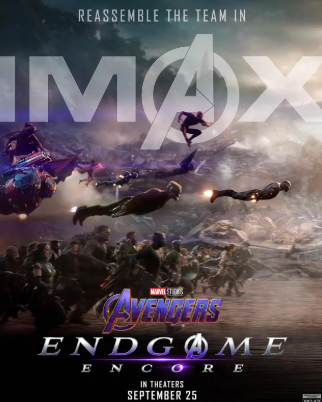
Seven years after Avengers: Endgame closed out the Infinity Saga, Marvel Studios is sending it back to theaters — but not as a simple nostalgia re-release. Avengers: Endgame Encore has been deliberately re-cut with new footage designed to bridge directly into Avengers: Doomsday, turning the Infinity Saga’s grand finale into connective tissue for the Multiverse Saga’s own ending. Here’s exactly what’s changed, and why Marvel felt the need to alter a seven-year-old, near-$2.8 billion blockbuster.
Quick Facts
| Category | Details |
|---|---|
| Original Release | April 26, 2019 |
| Encore Release | September 25, 2026 |
| Original Runtime | 181 minutes |
| Encore Runtime | 185 minutes (4 minutes longer) |
| Directors | Anthony and Joe Russo |
| Purpose | Bridge directly into Avengers: Doomsday (December 18, 2026) |
| Format | Theatrical re-release, including IMAX and “Infinity Vision” screenings |
| Bonus Content | Exclusive first look at Avengers: Doomsday footage |
How Endgame Encore Is Different From the Original
1. A brand-new post-credits scene — the first the film has ever had. This is the single biggest change. The original 2019 Endgame famously had no post-credits scene at all — a deliberate storytelling choice at the time, meant to signal that this really was the ending of the Infinity Saga, with nothing left dangling. That absence became iconic in its own right; after a decade of MCU films training audiences to sit through credits for a teaser, Endgame’s silence was itself a statement. Encore breaks that tradition entirely, adding a new scene specifically designed to connect the film into Avengers: Doomsday. This alone tells you how seriously Marvel is treating this re-release — they’re willing to undo one of Endgame’s most talked-about storytelling decisions purely to serve the next chapter of the saga.
2. A custom new intro sequence. Reports describe a detailed opening similar in style to the one used for Spider-Man: Brand New Day — meaning viewers can expect something more polished and stylized than a simple “previously on” recap. Rather than dropping straight into the film’s opening scene as the 2019 cut did, Encore is expected to reorient audiences, likely reminding casual viewers of where things stood after Infinity War, before launching into the story proper.
3. Expanded scenes around Tony Stark’s funeral. Rather than the funeral sequence audiences saw in 2019, new footage reportedly adds full conversations between Steve Rogers and both Pepper Potts and Scott Lang. The Scott Lang addition is a particularly clever choice thematically — his own experience navigating the Quantum Realm and alternate timelines in Ant-Man and the Wasp: Quantumania gives him a reason to understand what Steve is about to do (disappear into another timeline) better than almost anyone else at that funeral. A new brotherly conversation between Thor and Steve Rogers is also reportedly added, which matters because it reinforces their status as the Avengers’ senior leadership left standing after Tony’s death — setting emotional groundwork for both characters’ larger roles going into Doomsday.
4. A pivotal new Loki scene that recontextualizes Steve Rogers’s entire ending. This is the most narratively significant change in the whole re-release. According to reports, Loki appears at Peggy and Steve Rogers’s house with information that changes how audiences are meant to understand Steve’s fate. In the original film, the implication was that Steve traveled back in time, lived out a full life with Peggy Carter in the same reality/timeline, and then returned as an old man to pass his shield to Sam Wilson. The new Loki scene reportedly reveals this wasn’t quite accurate: the 2012 time heist didn’t send the Avengers back in time within their own single timeline at all — it instead transported each of them into entirely different universes, creating “nexus events” (a concept introduced later, in the Loki Disney+ series). This effectively means Steve didn’t live in “his own” past — he moved to a new, separate universe similar to but distinct from the MCU’s main continuity, sometimes called Earth-616. This single change retroactively answers a plot hole many fans and critics raised back in 2019 (how did old Steve avoid creating a second version of himself running around the timeline?) while simultaneously setting up how Steve Rogers can plausibly return for Doomsday without breaking established time-travel rules.
5. Subtle visual and color-grading changes throughout. Fans comparing the Encore trailer to the existing Disney+ streaming version have already spotted real differences — for example, a shot of Thanos leading his armies into the final battle shows noticeably increased contrast and saturation in the new cut compared to the original. These aren’t just marketing polish; they suggest Marvel gave portions of the film an actual visual regrade for the re-release, not unlike how films sometimes receive remastering passes for anniversary re-releases.
6. Exclusive theatrical-only bonus content. IMAX and “Infinity Vision” screenings will include an exclusive first look at Avengers: Doomsday footage, giving theatrical audiences a genuine incentive beyond nostalgia. Attendees are also being offered collectible Iron Man-themed popcorn buckets, a marketing tactic Marvel and other studios have leaned into heavily for high-anticipation releases in recent years.
7. What’s explicitly NOT changing. Marvel has been careful to manage expectations here. This is officially a “re-release,” not an “extended cut” — a distinction the studio has repeated across its marketing. That means: no Doctor Doom cameo suddenly appearing mid-film, no restructured act breaks, no altered outcomes for major character deaths (Tony Stark and Black Widow’s fates remain unchanged), and no wholesale re-edit of the three-hour story. The additions are connective tissue layered around the edges of the existing film, not a fundamental rewrite.
Understanding the Nexus Event Retcon (For Newer Fans)
If you haven’t watched the Loki Disney+ series, the term “nexus event” might sound unfamiliar, so here’s the quick version: in that show, a “nexus event” is any moment where a person makes a choice significant enough to branch off an entirely new, separate timeline from the “Sacred Timeline.” Originally, the Time Variance Authority (TVA) existed to prune these branches and keep one single timeline intact — until Loki‘s own story revealed that policing reality this way was flawed and ultimately abandoned.
Applying that concept retroactively to Endgame changes quite a bit. In 2019, Steve Rogers’s choice to stay in the past with Peggy Carter was generally understood (with some hand-waving) to mean he simply lived quietly in the same timeline, somehow avoiding the paradox of a second Steve Rogers existing simultaneously. Fans debated this endlessly for years. By having Loki explicitly explain that Steve’s actions created a nexus event and sent him to a different universe entirely (rather than the same one), Marvel closes that plot hole cleanly using rules its own franchise later established — while also giving Steve Rogers a clean, logical path to return for Doomsday from a genuinely separate reality, consistent with that film’s own multiverse-collision premise.
Pros & Cons of the Re-Release
Pros
- A genuinely purposeful re-release rather than a pure cash-grab — the new footage serves real narrative connective tissue rather than existing for its own sake.
- The new Loki scene finally answers a long-debated plot hole about Steve Rogers’s ending, using rules the MCU itself established after Endgame’s original release.
- Exclusive Doomsday footage for theatrical audiences gives longtime fans a genuine incentive to see it on the big screen again.
- The visual regrade suggests real care was put into the presentation, not just bolted-on new scenes.
- It’s a low-risk, low-cost way for Marvel to re-engage casual fans who may have drifted away during the denser Phase Four through Six slate, without demanding they catch up on everything released since 2019.
Cons
- At only 4 minutes of additional footage, some fans expecting a fuller “extended cut” experience may be disappointed by how modest the changes actually are.
- Since it’s officially a re-release and not an extended cut, several early reports (suggesting up to 7 minutes of new content) turned out to be somewhat exaggerated compared to the confirmed 4-minute runtime difference.
- Viewers who dislike after-the-fact retcons may find the new Loki scene feels like Marvel rewriting its own ending rather than letting Endgame’s conclusion stand as originally intended.
- Purists who loved Endgame’s post-credit-free ending as a bold, confident storytelling choice may see the new post-credits scene as undercutting that decision.
- It’s still a theatrical-only re-release at time of writing, meaning fans without easy cinema access will have to wait for the eventual streaming version to see the changes.
Why Marvel Is Doing This
As one Marvel Studios representative put it, “You don’t always get the chance to re-release because it costs money, so the fact that we can enhance the story of Doomsday by bridging it to Endgame and these characters that we worked with for years that we love so much, and continue their story: It’s a really unique opportunity.” With Doomsday directly picking up threads from Endgame‘s ending — and reuniting Robert Downey Jr. with the MCU, now playing Doctor Doom instead of Tony Stark — Marvel is using the re-release as a low-risk way to re-familiarize both longtime fans and casual viewers with exactly where the story left off, especially anyone who hasn’t kept up with the denser, more sprawling Phase Four through Six slate.
Comparing This to Endgame’s Original 2019 Re-Release
This isn’t actually the first time Endgame has been sent back to theaters with bonus material. In June 2019, just two months after its original release, Marvel re-released the film with a new post-credits deleted scene, a tribute, and other minor additions — explicitly framed at the time as “not an extended cut” as well, timed to boost box office ahead of Spider-Man: Far From Home. Encore follows a similar playbook, but with a far more significant narrative purpose: rather than a minor victory-lap addition, this re-release is functioning as an actual bridge to the next Avengers film, seven years later.
Box Office Context
Avengers: Endgame currently sits just $126 million behind Avatar for the title of highest-grossing movie of all time worldwide. While Encore is not expected to be reported separately toward that all-time total in most tracking methodologies, the timing — right before Doomsday‘s December 2026 release — is clearly designed to maximize theatrical goodwill and box office attention heading into the year’s biggest MCU event.
Conclusion
Avengers: Endgame Encore isn’t a simple nostalgia cash-grab — it’s a genuinely purposeful re-release, using new connective footage, a first-ever post-credits scene, and subtle narrative recontextualization to turn a seven-year-old finale into a direct on-ramp for Avengers: Doomsday. Whether you’re revisiting Endgame for the big-screen experience or catching up before December’s crossover event, this is shaping up to be one of the more meaningful re-releases in recent blockbuster history.
FAQs
When does Avengers: Endgame Encore release? September 25, 2026, in theaters.
How much longer is Encore than the original Endgame? Four minutes longer — 185 minutes compared to the original’s 181-minute runtime.
Does Endgame Encore have a post-credits scene? Yes, marking the first time the film has had one; the original 2019 release famously had none.
Is Endgame Encore a full extended cut? No, Marvel has explicitly called it a re-release rather than an extended cut. The core story remains unchanged, with new connective footage added rather than a full restructuring.
Does Doctor Doom appear in Endgame Encore? No, don’t expect him to suddenly appear in the film itself — the connective material is more subtle, functioning as a bridge rather than a direct crossover cameo.
What does the new Loki scene reveal? Reportedly, Loki explains to Steve Rogers that the 2012 time heist actually transported Avengers team members to different universes rather than sending them back in time within the same reality, recontextualizing the meaning of Steve’s ending.
Can I still watch the original 2019 cut? Yes, the original theatrical cut of Avengers: Endgame remains available to stream on Disney+.
Is there a trailer for Endgame Encore? Yes, Marvel released the first official trailer, and it reportedly includes an exclusive look at Avengers: Doomsday footage for theatrical audiences.