
Introduction
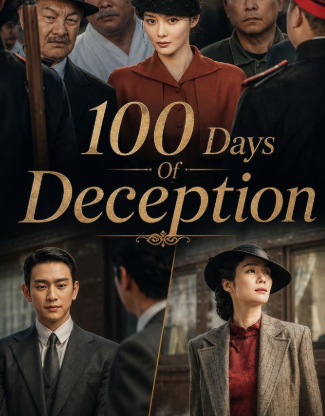
Kim You-jung and Park Jin-young star in 100 Days of Deception (Korean: 100일의 거짓말, literally “100 Days of Lies”), a period spy romance set in 1930s Seoul. It is a special project commemorating tvN’s 20th anniversary and premiered on tvN on October 10, 2026, airing every Saturday and Sunday at 9:10 PM KST. The drama is still airing and streams internationally on Netflix.
Quick Facts
| Detail | Info |
|---|---|
| Title | 100 Days of Deception (100일의 거짓말) |
| Also known as | 100 Days of Lies, One Hundred Days of Lies |
| Network | tvN |
| Streaming | Netflix |
| Premiere | October 10, 2026 |
| Episodes | 16, running through November 29, 2026 |
| Air days | Saturdays and Sundays, 9:10 PM KST |
| Genre | Historical, spy, romance, action |
| Setting | 1932 Gyeongseong (modern-day Seoul), during the Japanese colonial period |
| Directors | Yoo In-shik and Kim Yoon-jin |
| Writer | Ryu Bo-ri |
| Production | Studio Dragon and Nangman Crew |
| Languages | Korean, Japanese and English |
| Age rating | TV-MA |
| Audience score | 8.6/10 on MyDramaList from 2,746 users |
What Is 100 Days of Deception About?
In 1932 Gyeongseong, Lee Ga-gyeong, a top pickpocket aiming to secure her freedom, takes on a dangerous 100-day undercover mission inside the Japanese Government-General of Joseon. Her dream is personal, not political. Rather than being driven by grand patriotic ideals, she agrees to become a double agent to fund her dream of moving to America.
She accepts an offer from the independence group Gugukdan and infiltrates the Government-General disguised as an interpreter. Inside, she meets Kim Tae-ung, the newly appointed elite interpreter and adopted son of Shinichi Sato. Falling for her target’s son is exactly the complication that could ruin everything.
Her fake spy job was meant to last 100 days, but it slowly turns her into a real informant caught between survival, loyalty and conviction. The countdown gives the story its pulse: every episode asks what she will have to give up before time runs out.
The Historical Setting Explained
The drama takes place in Gyeongseong, the name used for Seoul under Japanese rule. It is set during the 1910 to 1945 colonial era. In this world, production design, sets, costumes and props recreate 1932 Gyeongseong, and the teaser highlighted the bustling Gyeongseong Station and the Government-General building, where Koreans and Japanese police intermingle.
The period was one of resistance, informants and impossible choices, with independence activists working in secret both inside Korea and abroad. For viewers new to the era, think of a world where everyday survival and quiet resistance often collide. The drama is fiction, so Ga-gyeong, Hideo and the Gugukdan group are not real historical figures, but they are placed against a real historical backdrop.
The production treated that history seriously. Before the first script reading, the cast and production team observed a moment of silence to honor the sacrifices of independence activists. The team said the drama tells the story of ordinary people who never lost sight of independence as a light of hope during a dark era.
Meet the Characters
| Character | Played by | Who they are |
|---|---|---|
| Lee Ga-gyeong / Geum Seo-hui | Kim You-jung | A pickpocket turned double agent whose cover name is Geum Seo-hui |
| Kim Tae-woong (Tae-ung) / Sato Hideo | Park Jin-young | An elite interpreter for the Japanese colonial government who is also an ethnic Korean |
| Yoo So-ran | Kim Hyun-joo | A sniper for the anti-Japanese resistance group Gugukdan |
| Philip Yoo | Lee Moo-saeng | A Gyeongseong correspondent for an American news agency, and a member of the resistance group |
| Sato Shinichi | Jin Seon-kyu | Director General of the Government-General of Chosen |
| Geum Seok-jung | Kam Woo-sung | So-ran’s long-lost husband |
| Ryu Gwang-sil | Seo Jung-yeon | A supporting role |
| Kim Myeong-nam | Park Jung-yeon | A Gugukdan member |
| Kim Seung-eok | Lee Ki-young | President of Joil Textile |
| Lee No-ma | Hong Xa-bin | A supporting role, and Ga-gyeong’s partner in stealing from passengers |
The wider cast also includes Choi Duk-moon, Kim In-kwon, Lee Do-goon, Kim Joong-hee, Kim Do-hyun and Kouri Yuuka.
Character Spotlight: The Four Leads
Lee Ga-gyeong (Kim You-jung): A survivor first and a patriot second. She lives in a rural community of displaced pickpockets who work under duress for an abusive boss. Her motivation is escape, which makes her an unusual spy: she doesn’t believe in the cause at first, and that makes her change more interesting.
Sato Hideo / Kim Tae-ung (Park Jin-young): Loyal on the surface, uncertain underneath. He seems unflinchingly loyal to Sato, but is quietly drawn to Ga-gyeong from their first brush at the station. His double identity, Japanese in public and Korean by birth, makes him one of the most layered characters in the series.
Yoo So-ran (Kim Hyun-joo): The mission’s mastermind and its emotional heart. The Korea Times praised Kim Hyun-joo’s acting in episode 2 as a masterclass, especially as she faces her long-lost husband and recalls losing her daughter.
Sato Shinichi (Jin Seon-kyu): The power at the top and the target of the assassination plot, with a past that the drama slowly opens up.
Episode Guide (Spoiler-Light)
These summaries use Netflix’s official episode descriptions and avoid major reveals. Episodes after 7 will be added as they air.
| Ep | Air date | What happens |
|---|---|---|
| 1 | Oct 10 | Pickpocket Ga-gyeong wants only to flee colonial Joseon, but ends up entangled with the independence movement. It begins when she steals a bag with a hidden compartment full of bullets. |
| 2 | Oct 11 | Her language skills shock Philip and So-ran, while Tae-ung’s insistence that she return his wallet raises her suspicions. |
| 3 | Oct 17 | Despite initial reservations about So-ran, the two join hands, and on her first day undercover Ga-gyeong meets a familiar face. |
| 4 | Oct 18 | Tae-ung remains suspicious of Ga-gyeong but is strangely captivated, while the Gugukdan start making big plans. |
| 5 | Oct 24 | Asked to translate during an interrogation, Ga-gyeong struggles when she recognizes the man being questioned, and Tae-ung’s feelings grow conflicted. |
| 6 | Oct 25 | Sato Shinichi confronts his past, and as the interrogation escalates, Ga-gyeong finds unexpected solace in Tae-ung. |
| 7 | Oct 31 | Tae-ung confides in Ga-gyeong about his hidden family past, bringing them closer, while she makes discoveries of her own. |
| 8 | Nov 1 | Scheduled to air on tvN on November 1 at 9:10 PM KST |
Spoiler-light notes: Episode 1 sets up the central misunderstanding and the first meeting with Hideo. Episode 2 makes a banquet scene a showcase for Kim Hyun-joo. Episodes 5 to 7 shift from planning to emotional fallout, and episode 7 ends with a moment of trust that raises the stakes for the second half.
Viewership Ratings, Episode by Episode
According to Nielsen Korea figures reported by Korean media:
| Ep | Nationwide | Seoul area | Note |
|---|---|---|---|
| 1 | 5.28% | 5.41% | The highest premiere rating among tvN’s Saturday-Sunday dramas of 2026 |
| 2 | 7.61% | 8.29% | Passed 7% after two episodes |
| 3 | 6.99% | 7.45% | A small dip |
| 4 | 9.04% | 9.82% | A big jump |
| 5 | 6.54% | 7.02% | A dip |
| 6 | 9.52% | 9.91% | Series high, with a peak of 10.4% |
| 7 | 7.19% | 7.21% | Back to the 7% range |
What the numbers say: The ratings zigzag between Saturday and Sunday, but each peak is higher than the last, with a clear upward trend since the 5.3% premiere. Episode 6 was the standout: it ranked first in its time slot across all channels, including terrestrial broadcasters, and first among viewers aged 20 to 49, tvN’s key demographic. Korean netizens reacted warmly, with one writing they cried their eyes out binge-watching the first five episodes.
How 100 Days of Deception Was Received
Audience scores: MyDramaList shows 8.6 out of 10 from 2,746 users, and AsianWiki’s user rating is 93/100 from 250 votes. One viewer said Kim You-jung delivers a career-defining performance, capturing the danger and raw resilience of 1930s Gyeongseong.
Critic reception:
- The Korea Times said the drama uses two central couples to explore how the hardship of a painful era shaped ordinary people.
- It also praised Park Jin-young’s restrained gestures, which reveal growing tenderness toward Ga-gyeong, and called him K-drama’s “chemistry king.”
- K-waves and Beyond wanted to see how Kim You-jung plays the manipulative side of Ga-gyeong, since she already showed how skillfully the character uses an unfavorable situation.
- Ready Steady Cut said in its premiere recap that everything else is top-notch, especially how the story unfolds, and titled it “This One Is Going to Be Good.”
Production Background
- A tvN milestone: The drama is part of tvN’s 20th-anniversary celebrations.
- Experienced director: Yoo In-shik previously directed Dr. Romantic, Vagabond, Extraordinary Attorney Woo and The WONDERfools.
- Writer: Ryu Bo-ri wrote Do You Like Brahms? and Trolley.
- Studios: Studio Dragon and Nangman Crew produce the series.
- Timeslot: It follows Four Hands Two Sonatas in the tvN weekend slot.
- Teaser timing: The first teaser was released exactly 100 days before the premiere.
- Script reading: The cast and team gathered on August 21, and the script reading included Kim You-jung, Park Jin-young, Kim Hyun-joo, Lee Moo-saeng, Jin Seon-kyu, Lee Ki-young, Choi Duk-moon, Seo Jung-yeon and Kim In-kwon.
- Press conference: Held at CGV Yongsan IPark Mall in Seoul. One actor said reading the script made them feel that being part of the project would be a privilege in their acting career.
- Tagline: The production team described the romance as growing from lies that neither wants exposed, turning into genuine feelings for each other.
- Music: Composer Kim Tae-seong scores the series.
The Cast’s Recent Work
Fans of the leads will find familiar faces. Kim You-jung recently starred in Dear X, Park Jin-young in Still Shining, Kim Hyun-joo in Hellbound 2, Lee Moo-saeng in As You Stood By, and Jin Seon-kyu in The Price of Confession. Park Jin-young is also known as a member of GOT7, and the Korea Times highlighted his earlier pairings with Kim Go-eun and Park Bo-young.
Key Themes
- Identity and disguise. Almost everyone is playing a part: a spy as an interpreter trainee, an ethnic Korean as a Japanese official, a sniper as a wife.
- Truth versus lies. The title, the poster tagline and the central romance all play with what is real.
- Ordinary people under pressure. The drama is as interested in survival and grief as in action.
- Two couples, two kinds of love. Ga-gyeong and Hideo’s tentative romance mirrors So-ran’s painful reunion with her husband.
- Moral compromise. Nobody gets through the story without making hard choices.
Where to Watch and How to Keep Up
The drama airs on tvN in Korea every Saturday and Sunday at 9:10 PM KST, which is about 5:40 PM IST in India. It also streams on Netflix in many regions, with new episodes weekly. Netflix release times and availability vary by country, so check your app. The 16-episode run is scheduled to end on November 29, 2026.
Pros
- Strong leads. Kim You-jung’s survivor-turned-spy and Park Jin-young’s restrained interpreter have natural chemistry.
- A proven creative team. Yoo In-shik’s directing record adds confidence.
- Rich production design. The Gyeongseong recreation gives the series scale and atmosphere.
- A clever structure. The 100-day countdown keeps the tension tight.
- Emotional depth. The second couple and the historical backdrop give the story weight.
- Rising momentum. Ratings and audience scores keep climbing.
- Fresh heroine. A selfish thief who slowly finds a cause is more interesting than a born patriot.
Cons
- Heavy themes. Colonial rule, violence and loss make it an intense watch.
- Still airing. Viewers must wait weekly, and the ending is unproven.
- Ratings swings. Weekly numbers rise and fall, which some fans find nerve-racking.
- Familiar tropes. Forbidden love between enemies and double agents are well-worn K-drama ideas.
- Mid-series risk. Sixteen episodes is long, and middle stretches of spy dramas can sag.
How It Compares to Other Period Dramas
A Korea Times piece invited comparison with Mr. Sunshine, a landmark drama about the same era. 100 Days of Deception is lighter on grand tragedy and heavier on spy-thriller structure and romance. If you liked the atmosphere of 1930s Seoul or love stories that grow under impossible circumstances, it is a natural next watch.
Should You Watch 100 Days of Deception?
Watch it if you like period dramas, spy thrillers, slow-burn romance, strong female leads or Kim You-jung and Park Jin-young.
Skip it if you prefer light romantic comedies, dislike violence and wartime themes, or want to binge a finished series without waiting weekly.
Where to start: Begin at episode 1. By the end of episode 2, you will know the mission, the two couples and the tone, and whether it suits you.
Our Review in Detail
This review is an editorial summary based on early reception, critic coverage and viewership data. The drama is still airing, so our rating is provisional.
The premise. The strongest idea is the 100-day deadline paired with an unwilling spy. A heroine who is in it for money and escape, not a cause, gives the story room to grow. Her arc from self-interest to conviction is the kind that rewards patience, and the title’s “lies” hint that several characters are living inside one.
The performances. Kim You-jung’s Ga-gyeong is clever, guarded and funny when she needs to be, and critics and viewers alike praise how she mixes street-smart toughness with vulnerability. Park Jin-young plays Hideo with restraint, letting small gestures do the work, which suits a man who cannot afford to show what he feels. Kim Hyun-joo anchors the emotional side with a performance critics called a masterclass in episode 2.
The romance. The chemistry is built on suspicion, not instant attraction. Hideo is wary of Ga-gyeong and drawn to her at the same time, and she must keep lying to someone who is slowly coming to trust her. Episode 7’s moment of shared history shows how the writing uses small confessions to move the relationship forward.
The direction and production. Yoo In-shik’s experience with ensemble and genre dramas shows in the steady pacing and the clear tone shifts between tension, grief and lighter moments. The sets, costumes and station scenes make 1932 Gyeongseong feel lived-in, not like a backdrop.
The pacing. The first seven episodes build a strong foundation, and the ratings zigzag shows an audience that is hooked but still settling in. The key question is whether the second half can sustain that tension for nine more episodes without repeating the same structure of near-discoveries.
The history. The drama treats the colonial era with respect, from the moment of silence at the script reading to the focus on ordinary people. It does not try to be a documentary, and it is better read as a human story set in a real era.
The risks. The usual pitfalls of the genre apply: a mid-series slump, a convenient plot twist, or a finale that rushes the resolution. Until the last episode airs, those remain open questions.
Detailed Scorecard
| Category | Score | Why |
|---|---|---|
| Lead performances | 4.5 / 5 | Strong, layered and well matched |
| Chemistry | 4.5 / 5 | Slow-burn tension that works |
| Story and premise | 4 / 5 | A clever hook, with familiar genre ideas |
| Setting and production design | 4.5 / 5 | Convincing, atmospheric 1932 Gyeongseong |
| Direction | 4 / 5 | Confident and well paced |
| Supporting cast | 4 / 5 | Strong second couple and villains |
| Pacing so far | 3.5 / 5 | Solid start, with the second half still to prove |
| Emotional impact | 4 / 5 | Grief and sacrifice land |
| Rewatch value | 3.5 / 5 | Good, though the twists matter on first watch |
| Overall | 4 / 5 | Provisional, one of the best new K-dramas of the season |
Our Rating
4 / 5 (provisional, as the series is still airing)
Final Verdict
100 Days of Deception is a polished, emotionally charged spy romance with a smart premise, a charismatic lead pair and a rich historical setting. The ratings are climbing, the audience scores are high and the countdown structure keeps every episode tense. It carries the usual risks of a long-running period drama, so the final verdict depends on how well the second half lands. For now, it is one of the strongest K-dramas to follow this autumn, and an easy recommendation for fans of period romance and spy stories.
FAQs
What is 100 Days of Deception about?
A pickpocket in 1932 Seoul becomes a spy for the independence movement, infiltrating the Japanese Government-General as an interpreter for 100 days, and falls for her target’s adopted son.
What does the title mean?
The Korean title literally means “100 Days of Lies,” referring to the heroine’s 100-day cover identity.
When did it premiere?
October 10, 2026, on tvN.
How many episodes are there?
Sixteen, airing on Saturdays and Sundays through November 29.
When does the next episode air?
New episodes air every Saturday and Sunday at 9:10 PM KST, about 5:40 PM IST.
Who stars in it?
Kim You-jung, Park Jin-young, Kim Hyun-joo, Lee Moo-saeng and Jin Seon-kyu.
Where can I watch it?
On tvN in Korea and on Netflix internationally.
Is it based on a true story?
No. It is a fictional story set in a real historical period.
Is Park Jin-young the same person as GOT7’s Jinyoung?
Yes.
Is it a romance or a thriller?
Both. It is a period spy thriller with a forbidden-romance storyline and a second emotional storyline about So-ran.
Is it similar to Mr. Sunshine?
They share an era and a serious tone, but 100 Days of Deception leans more into spy-thriller structure and romance.
What are the ratings so far?
Episode 1 started at 5.3%, and episode 6 reached a series high of 9.5%, with a peak of 10.4%.
Is it suitable for kids?
No. It is TV-MA, with violence and mature themes.
Is the ending out yet?
No. The finale is scheduled for November 29, 2026.
Is there a Season 2?
No announcement. The drama is presented as a single 16-episode series.
Is it worth watching weekly or waiting to binge?
That is a personal choice. Weekly viewing builds tension, while waiting until the finale lets you binge without cliffhangers.
What language is it in?
Mainly Korean, with Japanese and English dialogue.
Do I need to know Korean history to follow it?
No. The drama explains what you need, and a basic idea of Japan’s colonial rule in Korea is enough.