
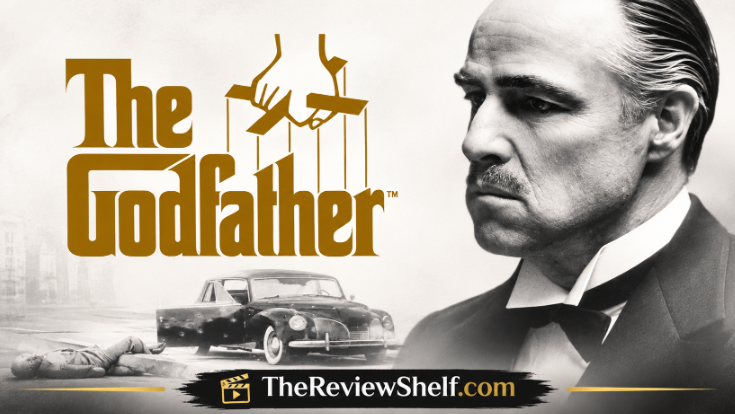
Few films have shaped cinema as deeply as The Godfather. Francis Ford Coppola’s 1972 crime epic, based on Mario Puzo’s novel, follows the Corleone family as an aging mafia patriarch hands power to his reluctant youngest son. More than half a century later, it remains a standard-bearer for the gangster genre, with a 4K restoration, theatrical re-releases and a place at the top of nearly every “greatest films” list. Here is a complete guide: the story, the cast, the awards, the legacy, our detailed review and rating.
Note: This guide is spoiler-light. The film’s major plot points are discussed only in general terms.
Quick Facts
| Detail | Info |
|---|---|
| Title | The Godfather |
| US release | March 24, 1972 |
| Runtime | About 2 hours 55 minutes (175 minutes) |
| Genre | Crime, drama |
| Director | Francis Ford Coppola |
| Screenplay | Mario Puzo and Francis Ford Coppola |
| Based on | The 1969 novel by Mario Puzo |
| Producer | Albert S. Ruddy |
| Cinematography | Gordon Willis |
| Music | Nino Rota |
| Studio | Paramount Pictures |
| Rating | R (US) |
| Box office | Roughly $250 million or more worldwide (original run plus re-releases) |
| Oscars | 3 wins from 11 nominations, including Best Picture |
| Our rating | 5 / 5 |
What Is The Godfather About?
Set in New York in the years after World War II, the film follows the Corleone family, led by the respected and feared Vito Corleone (Marlon Brando). Vito wields enormous influence through loyalty, favors and fear. When he is nearly killed in an attempt on his life, the balance of power shifts, and his youngest son Michael (Al Pacino), a war hero who wants no part of the family business, is gradually drawn into it. The story follows Michael’s transformation from reluctant outsider to cold, calculating head of the family.
Plot and Storyline (Spoiler-Light)
- The opening: A wedding, a favor requested of the Godfather and a first look at how the Corleone family operates.
- The attempt on Vito’s life: A rival bid for power sets off a bloody gang war.
- Michael’s choice: The family’s war pulls the outsider into its center.
- Politics and betrayal: Alliances shift among the New York crime families, and trust is a scarce commodity.
- The transformation: Michael’s rise is the film’s emotional spine.
- The final act: A carefully orchestrated sequence cements the family’s new order.
Cast and Characters
| Actor | Character | Role in the story |
|---|---|---|
| Marlon Brando | Vito Corleone | The aging patriarch and head of the family |
| Al Pacino | Michael Corleone | The youngest son who becomes the new Don |
| James Caan | Sonny Corleone | The hot-tempered eldest son |
| Robert Duvall | Tom Hagen | The family’s consigliere |
| Diane Keaton | Kay Adams | Michael’s girlfriend and later wife |
| John Cazale | Fredo Corleone | The weak middle brother |
| Talia Shire | Connie Corleone | Vito’s daughter |
| Richard Castellano | Clemenza | A trusted family captain |
| Abe Vigoda | Tessio | A family captain |
| Sterling Hayden | Captain McCluskey | A corrupt police captain |
| Al Lettieri | Virgil Sollozzo | A rival whose proposal starts the war |
Cast and Crew
| Role | Name |
|---|---|
| Director | Francis Ford Coppola |
| Writers | Mario Puzo, Francis Ford Coppola |
| Producer | Albert S. Ruddy |
| Cinematographer | Gordon Willis |
| Composer | Nino Rota |
| Studio | Paramount Pictures |
Behind the Scenes
- A troubled production. Paramount reportedly had doubts about Coppola, who was young, and about several of the casting choices, including Brando and Pacino.
- Brando’s casting. The studio initially resisted Brando, and his performance went on to win the Oscar.
- Pacino’s casting. Pacino was relatively unknown, and his casting was also a point of tension.
- The cinematography. Gordon Willis’s dark, shadowy lighting, nicknamed “the Prince of Darkness” style, became one of the film’s signatures.
- The music. Nino Rota’s theme is one of cinema’s most recognizable scores.
Awards and Legacy
- Academy Awards: Won 3 of 11 nominations, for Best Picture, Best Actor (Marlon Brando) and Best Adapted Screenplay.
- Brando’s Oscar: Brando famously declined the award, sending Sacheen Littlefeather to speak on his behalf in a protest about Hollywood’s portrayal of Native Americans.
- Nino Rota’s score: It was initially nominated but later disqualified because some of its music had been used in an earlier film.
- The sequels: The Godfather Part II (1974) won 6 Oscars, including Best Picture, and The Godfather Part III (1990) concluded the trilogy.
- National recognition: It was among the early films selected for the US National Film Registry, and it ranks at or near the top of the American Film Institute’s list of the greatest American films.
- Cultural influence: It shaped the gangster genre for decades, influencing filmmakers and television, including The Sopranos.
Latest Updates
- 4K restoration. For the 50th anniversary in 2022, Paramount released a new 4K restoration of the trilogy, overseen by Coppola, with a limited theatrical re-release and a 4K Ultra HD home release.
- The Coda re-edit. Coppola’s re-edited version of Part III, The Godfather Coda: The Death of Michael Corleone, was released in 2020.
- Indian re-releases. The trilogy returned to select PVR INOX cinemas in India in 2025, with the first film on September 12, Part II on October 17 and Part III on November 14.
- Streaming. Availability changes frequently. Reports suggested the film appeared on free ad-supported services in some regions in 2026, but this isn’t reliable, so check before publishing.
What Critics and Viewers Said
| Source | Verdict |
|---|---|
| Critics | Near-universal acclaim, and it is widely regarded as one of the greatest films ever made |
| Rotten Tomatoes | Around the high 90s percent for critics |
| IMDb | Around 9.2 / 10, among the highest-rated films on the site |
| AFI | Ranked among the top films in its American cinema lists |
Scores change, so check the live pages before publishing.
What reviewers agree on:
- Praise: Brando and Pacino’s performances, the cinematography, the storytelling and the film’s blend of family drama and crime epic.
- Criticism: Few serious criticisms exist. Some note its pacing and its depiction of women, and its romanticizing of criminals has been debated.
What Viewers Debate
- Part I or Part II. Fans often argue over which is the better film.
- Michael’s tragedy. Viewers debate whether he is the hero or the villain.
- Glamorizing crime. Some argue that the film makes violence and criminals look appealing.
- Portrayal of women. The female characters have limited roles, which some find a weakness of the period.
- Italian-American representation. The film has been both celebrated and criticized for how it depicts Italian-American culture.
The Performances
Marlon Brando (Vito): Soft-spoken and commanding, with a distinctive rasp and a quiet menace. The performance became the template for screen mobsters.
Al Pacino (Michael): The film’s emotional center. His slow, chilling transformation from idealist to ruler is one of cinema’s great character arcs.
James Caan (Sonny): Volatile and charismatic, a vivid contrast to Michael.
Robert Duvall (Tom Hagen): Calm, intelligent and loyal, the family’s steady hand.
Diane Keaton (Kay): Gives the outsider’s perspective on the family.
John Cazale (Fredo): A small but devastating performance as the weak brother.
Craft and Style
Cinematography: Gordon Willis’s low-lit, amber-toned images create a sense of secrecy and power, and the shadows in Vito’s office are a famous example.
Score: Nino Rota’s music blends romance and menace and is instantly recognizable.
Editing and structure: The film cuts between the wedding, violence and prayer in the famous baptism sequence, one of cinema’s great uses of parallel editing.
Dialogue: Many lines, including “I’m gonna make him an offer he can’t refuse”, have become part of everyday language.
Themes the Film Explores
- Power and corruption. How the pursuit of power changes a person.
- Family loyalty versus morality. The family comes first, even at a moral cost.
- The American dream. The immigrant experience and ambition pursued through dark means.
- Tradition versus modernity. Vito’s old-world code against Michael’s ruthless efficiency.
- Fate and choice. Michael wanted to avoid the family business, and the film asks whether he ever could.
Content note: The film is rated R for violence, language and adult themes. It is best suited to mature audiences.
Iconic Moments
- The opening wedding, which introduces the family and its codes.
- The horse head, one of cinema’s most famous shock moments.
- The restaurant scene, a turning point for Michael.
- The baptism montage, which intercuts a ceremony with a series of killings.
Pros
- Two landmark performances from Brando and Pacino.
- A masterful, patient story.
- Iconic cinematography and music.
- Memorable dialogue and scenes.
- Deep themes about family and power.
- A lasting influence on the crime genre.
Cons
- A long runtime that suits patient viewers.
- A slow, deliberate pace that may challenge modern audiences.
- Limited roles for women.
- A romanticized view of criminals, which some find problematic.
- Graphic violence in key scenes.
Should You Watch The Godfather?
Watch it if you enjoy great filmmaking, crime dramas or acting at its best, or want to understand a film that shaped modern cinema.
Skip it if you dislike slow, character-driven storytelling or are sensitive to violence.
Where to start: Begin with this film, then watch Part II. Part III is considered the weaker entry, and the Coda re-edit offers a different take.
Our Review in Detail
This review is an editorial take on a film that has been analyzed for more than fifty years.
The concept. On paper, The Godfather is a gangster film. In practice, it is a family tragedy told through the language of crime. The film treats the Corleones as a family first and a criminal enterprise second, and that choice is what gives it such lasting emotional power.
The story. The screenplay by Puzo and Coppola is a model of patient, layered storytelling. Every scene serves several purposes, whether it introduces a character, establishes a code or plants a seed that pays off hours later. The structure, moving from a wedding to a baptism, creates a satisfying circle. The film trusts its audience to follow a large cast and a slow build, and it rewards that trust with an ending that lands with enormous force.
Michael’s arc. This is the film’s greatest achievement. Pacino plays Michael as a quiet, intelligent man who slowly closes himself off, and the change is shown in small details: a look, a pause, a choice not to speak. The final scenes, in which Michael’s transformation becomes complete, are some of the most chilling in cinema because we have watched every step.
Brando’s Vito. Brando makes Vito both frightening and tender, a man who negotiates with gentle words and absolute authority. His performance sets a standard for gravitas, and the film’s first scenes, built around his quiet authority, define its tone.
The supporting cast. James Caan’s Sonny brings explosive energy, Robert Duvall provides calm intelligence and John Cazale gives Fredo a haunting weakness. Diane Keaton’s Kay is the audience’s moral perspective, though the script gives the female characters less to do than they deserve, which is a limitation of its time.
The craft. Gordon Willis’s cinematography uses darkness as a visual language, hiding eyes and faces in shadow to suggest secrets and menace. Nino Rota’s score adds a haunting, melancholic touch, and the editing, especially in the baptism sequence, is among the best in film.
The pacing. At almost three hours, the film moves at a deliberate pace, and some modern viewers may find the first act slow. That patience is what makes the violence, when it comes, so shocking and meaningful.
The moral questions. The film doesn’t judge its characters in an obvious way, which is both a strength and a point of debate. It invites sympathy for the Corleones while showing the cost of their choices. A careful viewer sees that Michael’s rise is a tragedy, and that the American dream pursued through violence leads to loss.
The legacy. The Godfather changed how crime stories were told, treating gangsters as complex, human figures. Its influence appears in countless films and television shows, and even people who haven’t seen it know its lines and images. It still holds up, and a 4K restoration shows how rich its visuals are.
The verdict in context. The Godfather is a rare film that combines popular entertainment with serious art. Its performances, direction, writing and craft are all exceptional, and its themes feel as relevant now as in 1972. It’s essential viewing, and one of the few films that justifies the word masterpiece.
Detailed Scorecard
| Category | Score | Why |
|---|---|---|
| Premise and concept | 5 / 5 | A crime saga that’s really a family tragedy |
| Story and screenplay | 5 / 5 | Layered, patient and unforgettable |
| Al Pacino’s performance | 5 / 5 | A landmark transformation |
| Marlon Brando’s performance | 5 / 5 | Defined the screen mobster |
| Supporting cast | 5 / 5 | Caan, Duvall and Cazale are superb |
| Direction | 5 / 5 | Coppola’s confident control |
| Cinematography | 5 / 5 | Willis’s shadows are iconic |
| Music and score | 5 / 5 | Nino Rota’s theme |
| Pacing | 4 / 5 | Deliberate, but long |
| Portrayal of women | 3 / 5 | Limited roles, a product of its time |
| Rewatch value | 5 / 5 | Reveals more with every viewing |
| Overall | 5 / 5 | A cinematic masterpiece |
Our Rating
5 / 5
Final Verdict
The Godfather is a masterpiece of storytelling, performance and craft, a crime epic that doubles as a profound family tragedy. Marlon Brando and Al Pacino give landmark performances, Coppola’s direction is assured, and its images and music remain unforgettable. Its pace and limited female roles reflect its era, but nothing diminishes its power. If you’ve never seen it, watch it. If you have, it’s worth watching again.
Recommendations: What to Watch Next
The rest of the saga
- The Godfather Part II (1974): Often considered as good as or better than the original, it follows young Vito’s rise and Michael’s decline.
- The Godfather Part III (1990) and The Godfather Coda (2020): The trilogy’s conclusion, with Coppola’s re-edit offering a different take.
- The Offer (2022): A series about the making of the film.
If you like great crime epics
- Goodfellas (1990): A fast, kinetic look at the mob from the inside.
- Once Upon a Time in America (1984): Sergio Leone’s long, poetic gangster epic.
- Scarface (1983): A rise-and-fall crime story.
- Casino (1995): Scorsese’s story of power and excess.
- The Departed (2006): A tense crime thriller.
- Heat (1995): A cat-and-mouse crime drama.
If you like family and power sagas on television
- The Sopranos: The TV drama most influenced by the film.
- Peaky Blinders: A stylish family crime saga.
- Gomorrah: A gritty Italian crime series.
- Succession: A family power struggle in the corporate world.
Where to Watch
Streaming availability for The Godfather changes often and varies by country, so check JustWatch or your local apps for current options before publishing. The film is widely available to rent or buy digitally, and on Blu-ray and 4K Ultra HD, including the 50th-anniversary restoration supervised by Coppola. The trilogy has also been re-released in cinemas, including in India in 2025.
FAQs
What is The Godfather about?
It follows the Corleone mafia family, focusing on patriarch Vito Corleone and his youngest son Michael, who reluctantly takes over the family business amid crime, loyalty and betrayal.
Who stars in it?
Marlon Brando (Vito), Al Pacino (Michael), James Caan (Sonny), Robert Duvall (Tom Hagen) and Diane Keaton (Kay), with John Cazale, Talia Shire and others.
When was it released?
March 24, 1972, in the United States.
Who directed and wrote it?
Francis Ford Coppola directed it, and he co-wrote the screenplay with Mario Puzo, based on Puzo’s novel.
How long is it?
About 2 hours and 55 minutes.
What awards did it win?
Three Academy Awards, for Best Picture, Best Actor (Marlon Brando) and Best Adapted Screenplay, from 11 nominations.
Did Brando accept his Oscar?
No. He declined the award and sent Sacheen Littlefeather to speak on his behalf.
What is its rating?
R in the United States, for violence, language and adult themes.
Are there sequels?
Yes. The Godfather Part II (1974), which won 6 Oscars, and The Godfather Part III (1990), plus the 2020 re-edit The Godfather Coda.
Do I need to watch the sequels?
No, but Part II is widely considered essential, and it deepens the story.
Has it been restored?
Yes. A 4K restoration was released for the 50th anniversary in 2022, overseen by Coppola.
How much did it make?
Roughly $250 million or more worldwide, including re-releases.
What is a famous quote?
“I’m gonna make him an offer he can’t refuse.”
Is it based on a true story?
No. It is based on Mario Puzo’s novel, though it draws on the world of organized crime.
Is it worth watching?
Absolutely. We rate it 5 out of 5.